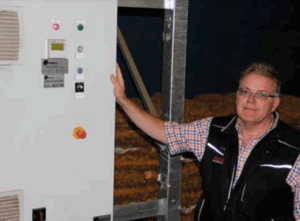

Potatoes – our strength since 1890. This is the slogan used by the potato trading company Tolls on its homepage. At its Willich site, the owner-managed family business processes only unwashed potatoes. To combat dust problems, Theo Tolls has invested in a dust filter system and has had positive experiences with it.
“"We are located in the heart of a potato-growing region with intensive potato cultivation. More than 90% of the cultivated land is irrigable, and this allows us to guarantee security of supply in terms of quality and quantity," says Theo Tolls, highlighting the region's unique advantages. His traditional company, which supplies seed, table, and processing potatoes, is located in the triangle formed by the cities of Düsseldorf, Krefeld, and Mönchengladbach. The 54-year-old entrepreneur has been in the potato business for over 30 years and has continuously expanded the company, which he took over from his father in 1991. Currently, approximately 60,000 tons of potatoes are sold annually, half of which are food products and the other half raw materials for processing into chips and French fries.
Our core business is the trade in loose goods
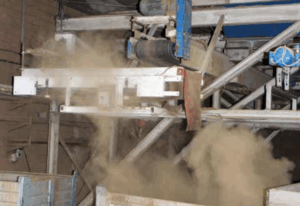
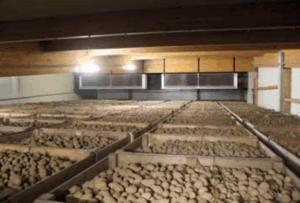
At its Willich site, the company has storage space for approximately 8,000 tons of potatoes in cold storage. Tolls' customers are primarily specialized packers who supply supermarkets and the French fry and chip industry with potatoes year-round. "Our core business is marketing loose goods," explains the entrepreneur, adding that packaging unwashed potatoes in bags is one segment of the portfolio. In 2018, this sorting and packaging facility was equipped with a dust extraction filter system from the Dutch manufacturer Jongejans Luchttechniek. "Due to the soil surrounding the potatoes, dust development is always a major problem, and thus the contamination of the machines and processing areas," says Tolls.
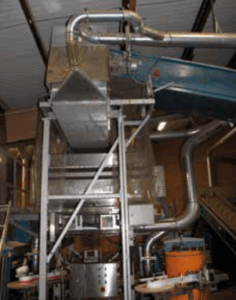
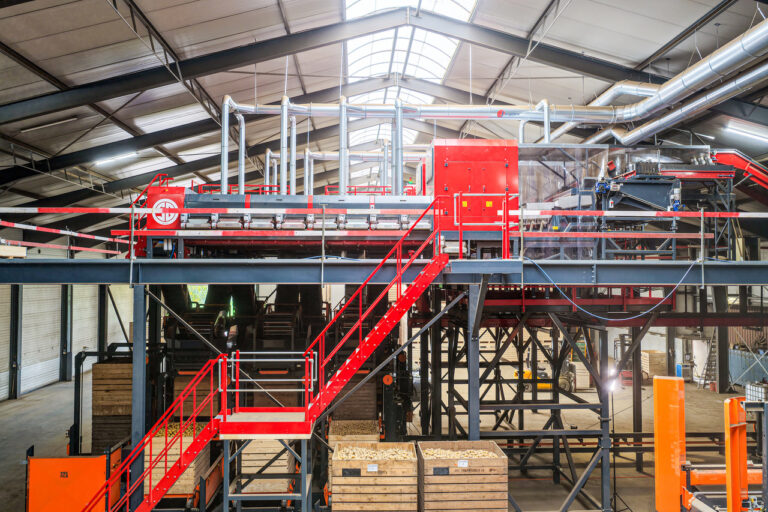
The decision to invest in an extraction system was primarily about creating a pleasant working environment. It was also about improving the quality of the workspaces for employees working on the sorting and packaging conveyors. A brush system is integrated into the sorting and packaging line, which also contributes to dust generation. Encapsulating the brush system with dust tents helps prevent the spread of dust. "There are extraction points at all points of the system, which extract the air contaminated with dust particles," explains Tolls.
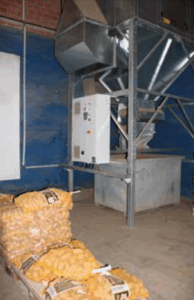
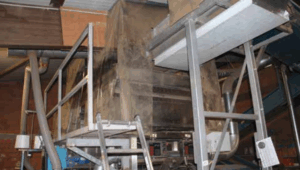
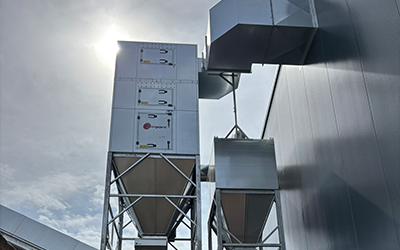
The sorting and packaging line is equipped with a total of ten extraction points. The extraction system's power (max. approx. 18.5 kW, frequency-controlled) is set to provide sufficient negative pressure to these ten extraction points. The extraction capacity is approximately 17,600 m³/h. The dust extraction system consists of a powerful fan and filters that are cleaned fully automatically with compressed air. The filtered air is returned clean to the room, thus retaining the heat within the hall; the extracted dust falls into a container beneath the filter unit. "We opted for a filter system with an air return function here to be more independent of the weather," explains Tolls.
A clean factory is a high priority
For Theo Tol, the benefits of the extraction and filter system are clear. Besides the higher quality of the work environment and the added value of the machines, he also mentions the positive effect on the company's overall image. He is convinced that a clean, tidy workspace is essential for the good name of the entire company.
The good experiences with the system were the reason for him to invest in another extraction system in the adjacent hall.
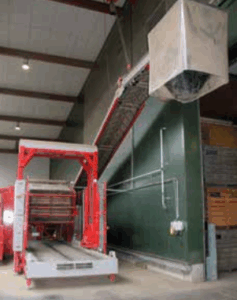
A dumping bunker is located here, and dust extraction takes place where the crates are filled. "This hall has a much larger volume, so we opted for a simpler version of the extraction system," explains Tolls. Here, the extracted air isn't returned to the hall but is expelled as clean air after passing through the filter, which traps the dust particles and collects them in filter bags.
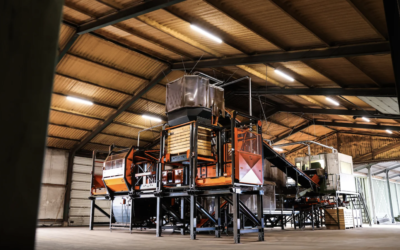
Separate from the filter system is the sorting facility, also located in this hall. Last year, it was technically improved and expanded with an electronic sorting system. Defective tubers and other foreign bodies are carefully sorted out there. Dust is bound here using spray nozzles.