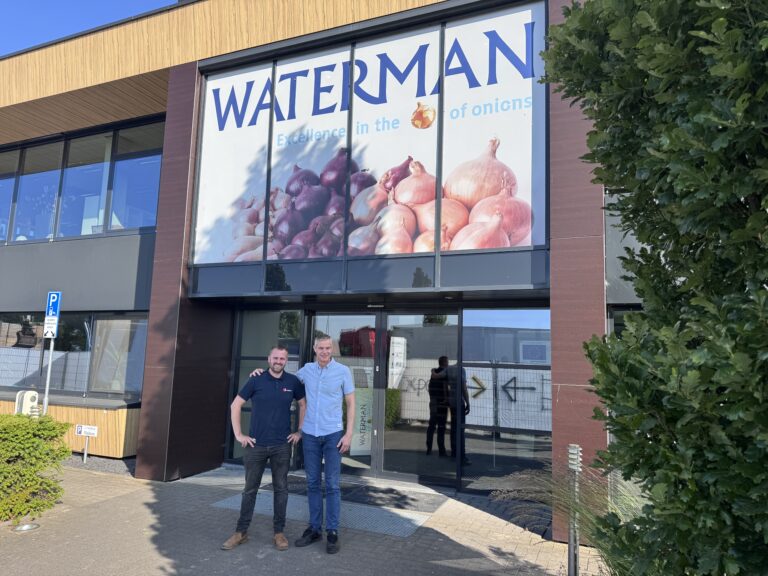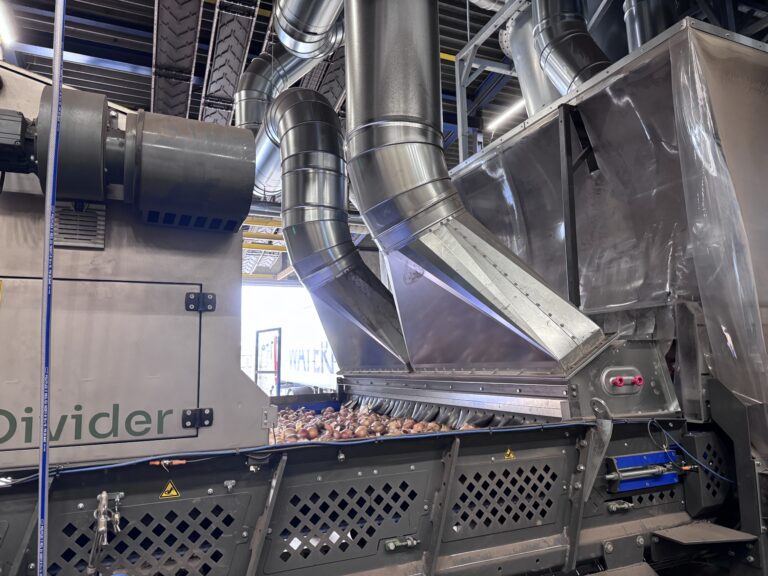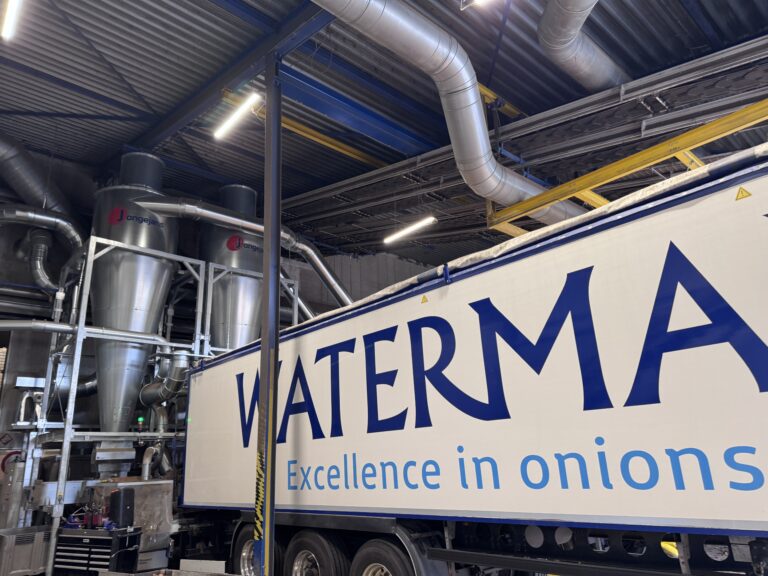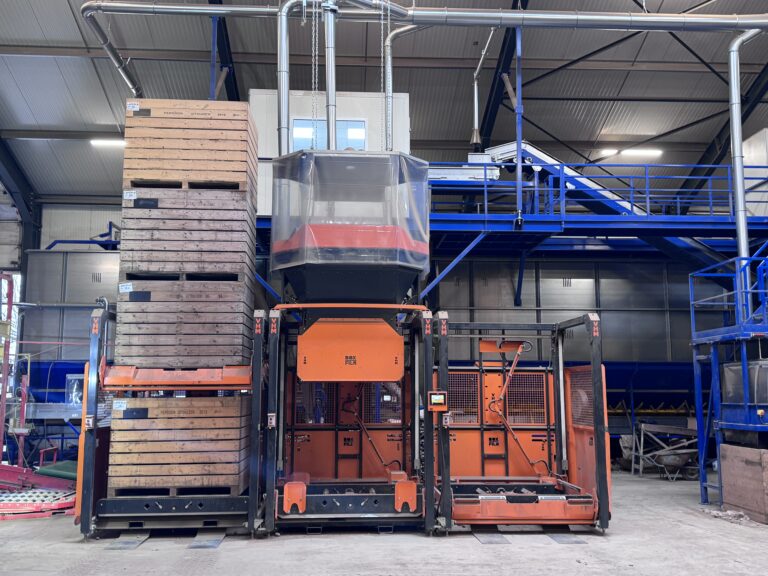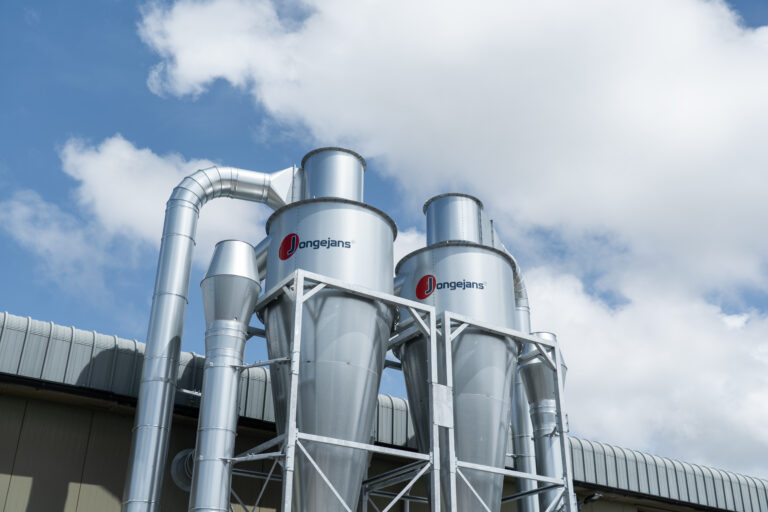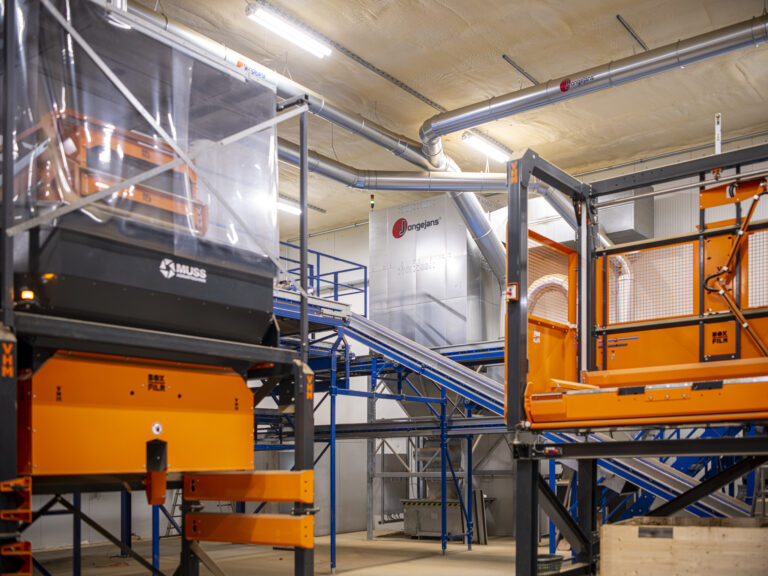



At Waterman Onions in Emmeloord, Jongejans Luchttechniek installed and optimised a windshifting system on a Flikweert Divider with a working width of 2,400 mm. The goal was to improve the pre-cleaning of the onions, remove onion skins, foliage and loose sand from the product stream at an early stage, and increase the capacity of the existing production line.
The result is measurable. After optimising the windshifting system, Waterman Onions achieved a capacity increase of at least 10%.
Removing onion skins, foliage and sand before the production line
During onion processing, onion skins, foliage, sand and other light particles are released. If these materials continue further into the production line, conveyors and processing machines have to handle not only the onions themselves, but also this unwanted material.
With windshifting for onion processing , these light particles are separated from the product stream during the pre-cleaning stage. A precisely controlled airflow removes onion skins, foliage and loose sand, while the onions continue along their normal path through the machine.
As a result, cleaner onions continue further into the production line and less unnecessary material is transported through the downstream equipment.
Windshifting on a 2,400 mm-wide Flikweert Divider
Achieving the best result requires more than sufficient airflow alone. The distribution and precise adjustment of the airflow are especially important.
At Waterman Onions, the Flikweert Divider operates across a working width of 2,400 mm. The air must be distributed evenly across this entire width. The airflow needs to be powerful enough to remove light particles such as onion skins, foliage and sand, without negatively affecting the onions.
Jongejans Luchttechniek therefore specifically adjusted the windshifting system to:
- the required air volume;
- the direction and distribution of the airflow;
- the product distribution across the Divider;
- the processing speed;
- the operating conditions within the existing onion processing line.
By carefully balancing these factors, the windshifting system performs consistently across the full working width.
A cleaner product stream improves onion processing efficiency
Removing onion skins, foliage and sand does more than improve product cleanliness. The equipment further down the production line also benefits.
Conveyors and processing machines receive less unwanted material. This reduces accumulation within the installation and helps maintain a more consistent product flow.
The result is more efficient onion processing, allowing a greater proportion of the available machine capacity to be used for processing onions.
Want to learn more about solutions for controlling dust and onion skins during sorting and processing? Discover our solutions for dust and onion skin control in onion processing.
At least 10% more capacity
After the windshifting system was installed and optimised, Waterman Onions achieved a clear improvement in production line capacity.
“Since the adjustment, we have achieved a capacity increase of at least ten percent,” says Wim Waterman.
By removing light particles early in the process, the rest of the installation has less unwanted material to process. This allows the available capacity of the existing production line to be used more efficiently.
More output from an existing production line
The project at Waterman Onions demonstrates that improving capacity does not always require replacing an entire production line.
By specifically optimising one essential processing step — pre-cleaning — the performance of an existing installation can be significantly improved.
Waterman Onions now benefits from:
- cleaner onions entering the production line;
- effective removal of onion skins, foliage and loose sand;
- a more consistent product flow;
- reduced load on downstream equipment;
- more efficient onion processing;
- at least 10% more capacity.
Applying windshifting to your onion processing line?
Would you like to remove onion skins, foliage and sand from your product stream at an early stage, or increase the capacity of an existing onion processing line? Jongejans Luchttechniek develops windshifting and extraction solutions that are specifically tailored to your product, machinery and processing capacity.
Discover how our windshifting technology works or explore our solutions for the onion processing industry.